Motorized Shades Vs Manual Blinds: Which Is Better For Your Energy Bills?
Motorized Shades Vs Manual Blinds: Which Is Better For Your Energy Bills?
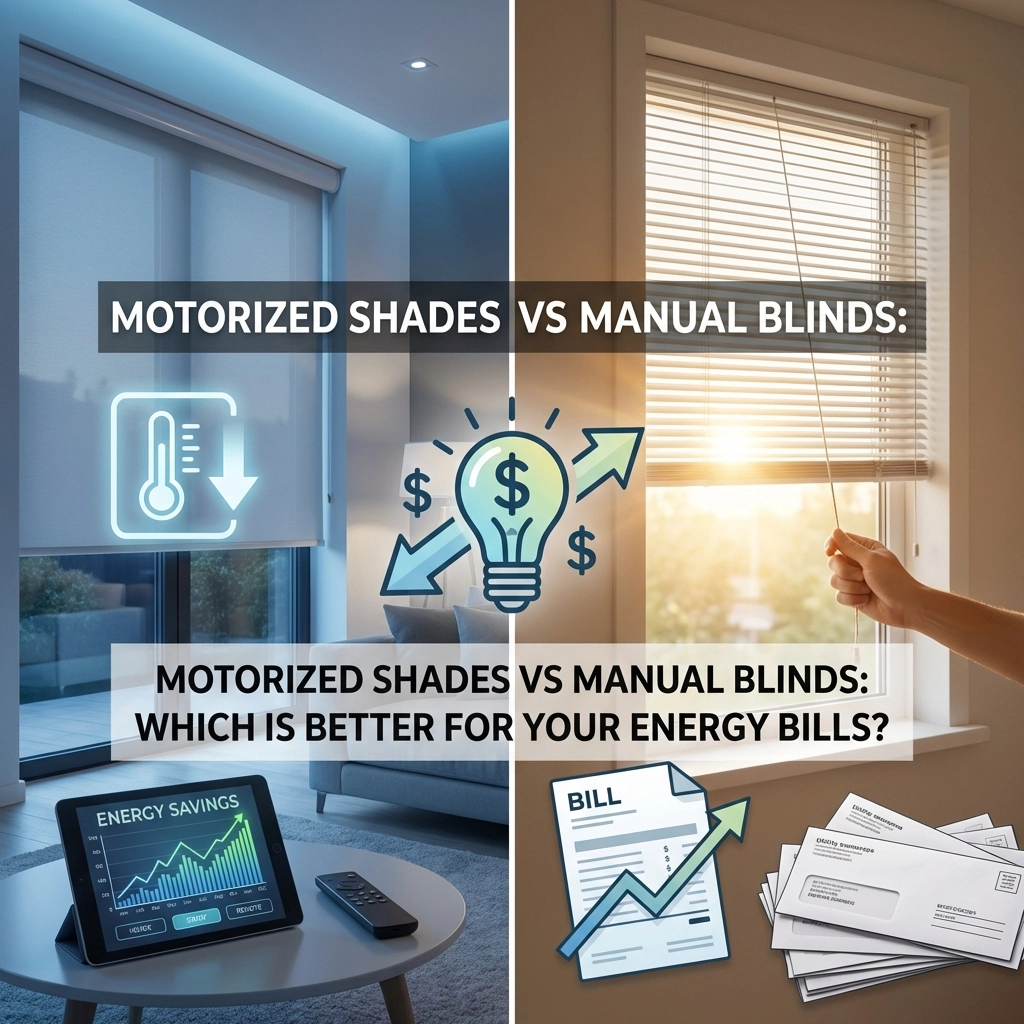
When it comes to managing your home’s energy costs, window treatments play a surprisingly significant role in your monthly utility bills. The choice between motorized shades and manual blinds isn’t just about convenience: it’s about creating a more energy-efficient home that saves you money year-round.
The short answer? Motorized shades consistently outperform manual blinds when it comes to reducing energy consumption and lowering your bills. But let’s dive into the specifics of why this matters for your home and your wallet.
The Energy Savings Battle: Numbers Don’t Lie
Recent studies have shown that automated window treatments can deliver impressive energy reductions. Research conducted at Chicago’s Willis Tower demonstrated that automated insulating window shades can cut energy consumption by approximately 25 percent. Even more compelling, these systems typically recoup their installation costs within three to five years through energy savings alone.
For residential applications, properly installed smart blinds and motorized shades can reduce HVAC costs by 10-25 percent through automated solar heat management. Smart roller shades specifically offer HVAC reduction in the 10-20 percent range, making them a smart investment for homeowners looking to cut long-term energy costs.
Manual blinds, while capable of contributing to energy efficiency in theory, fall short in practice. Their effectiveness entirely depends on your memory and consistency in adjusting them throughout the day: something most homeowners struggle to maintain.
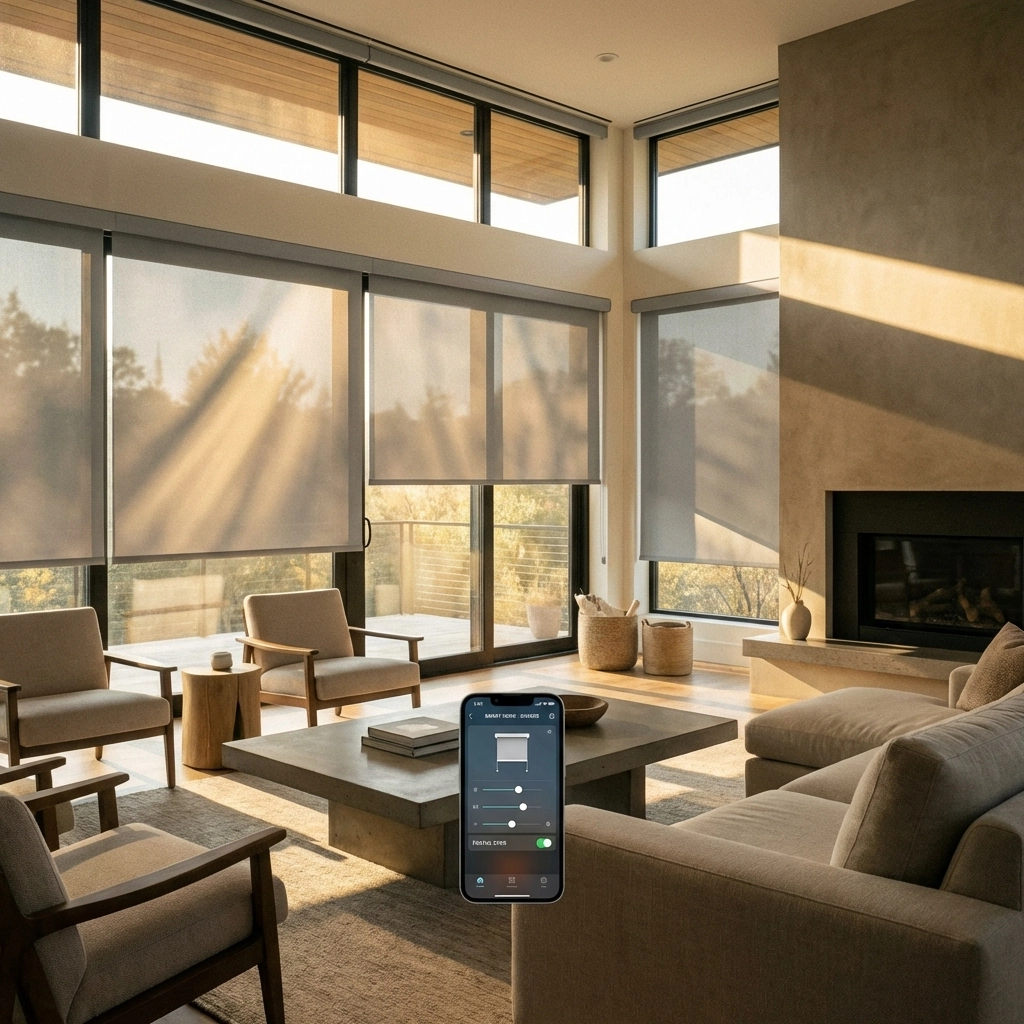
How Motorized Shades Maximize Energy Efficiency
Motorized shading systems excel at energy management through several key mechanisms that manual options simply can’t match:
Automated Scheduling
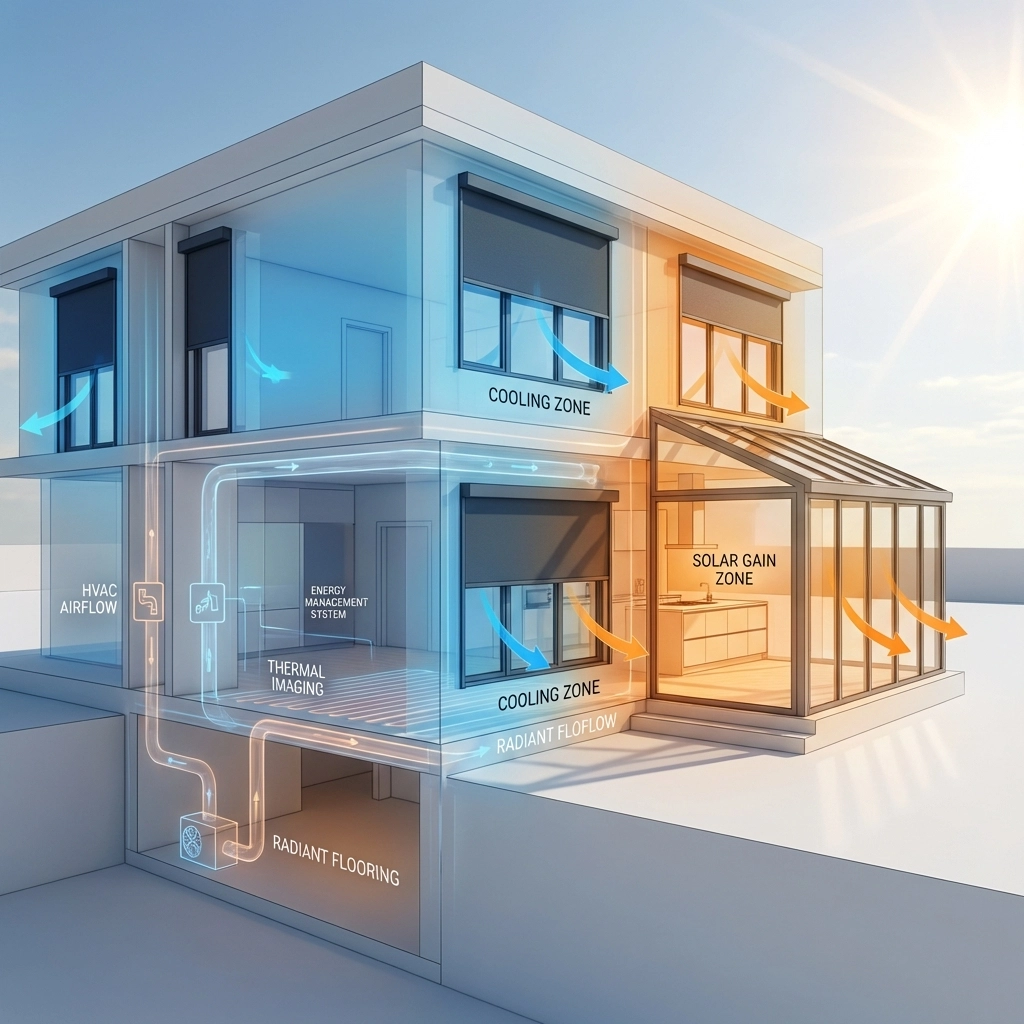
Motorized shades can be programmed to respond to daily patterns automatically. During summer months, they lower during peak heat hours to block intense sunlight that would otherwise force your air conditioning to work overtime. In winter, they raise strategically to capture valuable solar heat, reducing the burden on your heating system.
Real-Time Environmental Response
Advanced motorized systems integrate with sensors that monitor sunlight levels, temperature, and even wind conditions. This means your shades adjust in real-time to changing conditions throughout the day, optimizing energy use without any input from you.
Consistent Performance
Perhaps most importantly, motorized shades perform their energy-saving functions consistently, day after day. There’s no forgetting to close them during a heat wave or leaving them closed when you could benefit from natural warmth.
Why Manual Blinds Fall Short
Manual blinds and shades can theoretically provide similar energy benefits, but human behavior is their biggest limitation. Consider these common scenarios:
The Forgotten Adjustment: You rush out the door for work on a hot summer morning, forgetting to close your blinds. Your home bakes in the afternoon sun, and your air conditioner runs constantly to compensate.
Inconsistent Usage: You might remember to adjust your blinds some days but not others, creating unpredictable energy usage patterns that prevent you from maximizing savings.
Suboptimal Positioning: Even when you do adjust manual blinds, you’re unlikely to position them at the precise angles that would provide optimal energy efficiency throughout the day.
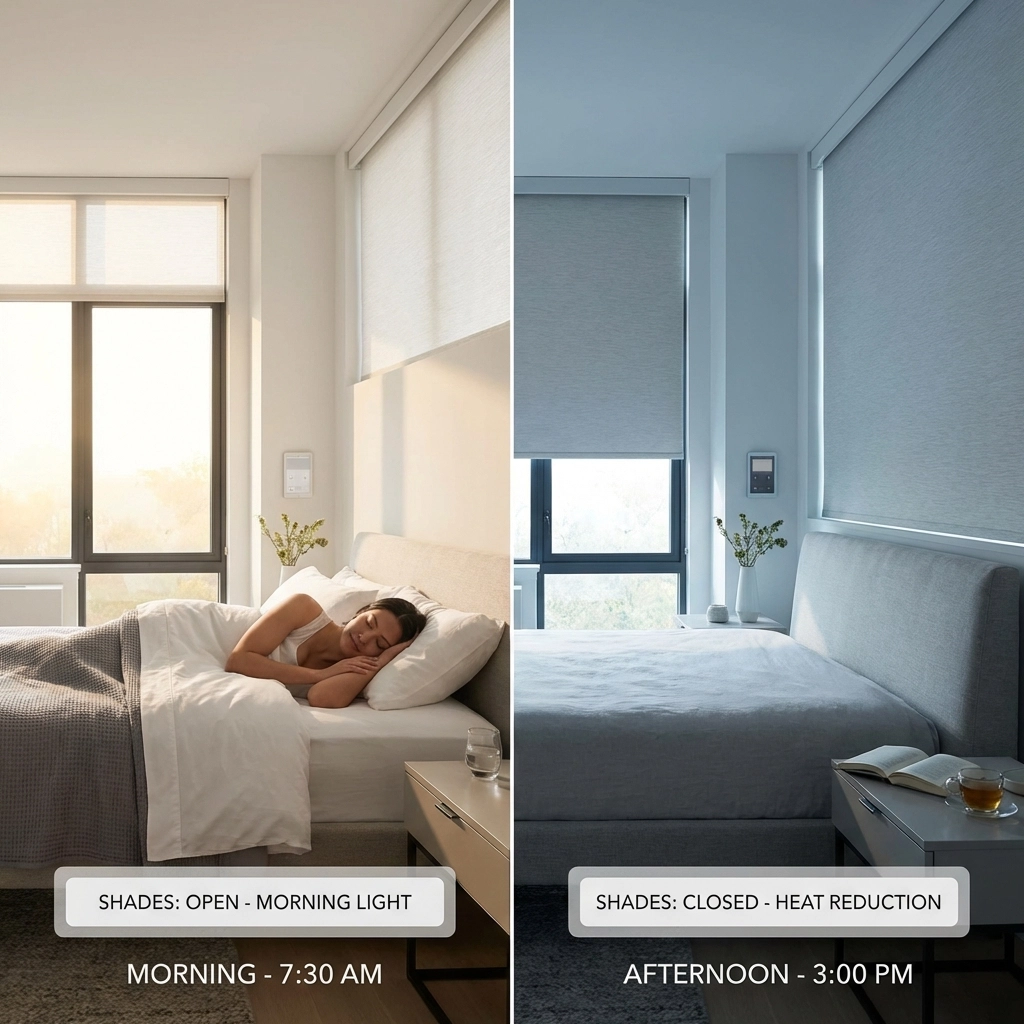
The Smart Home Integration Advantage
Modern motorized shades integrate seamlessly with smart home systems, creating opportunities for energy savings that extend beyond the shades themselves. When connected to your home automation system, motorized shades can:
- Coordinate with your thermostat to pre-cool or pre-heat your home more efficiently
- Respond to weather forecasts, preparing for temperature changes before they happen
- Work with occupancy sensors to adjust based on whether rooms are in use
- Connect with energy management systems to operate during off-peak electricity hours
This level of integration is impossible with manual systems, representing a significant advantage for tech-savvy homeowners focused on energy efficiency.
Breaking Down the Cost Analysis
While motorized shades require a higher upfront investment, the long-term financial picture tells a compelling story:
Initial Investment
Motorized shades typically cost 2-3 times more than comparable manual options when including installation and control systems. However, this initial cost difference becomes less significant when viewed through the lens of long-term energy savings.
Energy Bill Reduction
With potential HVAC savings of 10-25 percent, homeowners can expect to see noticeable reductions in their monthly utility bills almost immediately. For a home with $200 monthly energy costs, even a conservative 15 percent reduction saves $360 annually.
Return on Investment
Based on average energy costs and typical installation expenses, most homeowners see full payback on their motorized shade investment within 3-7 years, with continued savings for the life of the system.
Real-World Performance Examples
Commercial buildings provide excellent case studies for motorized shade performance. Beyond the Willis Tower study, numerous office buildings have documented similar results:
- A Seattle office building reported 23 percent HVAC energy reduction after installing automated window treatments
- A Phoenix commercial complex saw peak cooling load reductions of up to 30 percent during summer months
- Multiple university buildings have documented both energy savings and improved occupant comfort with motorized systems
These results translate effectively to residential applications, where the principles of solar heat gain management apply equally.
Making the Right Choice for Your Home
The decision between motorized shades and manual blinds ultimately depends on your priorities, budget, and lifestyle:
Choose Motorized Shades If:
- Energy efficiency is a top priority
- You want set-and-forget convenience
- You’re interested in smart home integration
- You’re planning to stay in your home long-term to realize the investment benefits
- You frequently forget to adjust manual window treatments
Consider Manual Blinds If:
- Upfront cost is your primary concern
- You consistently adjust window treatments throughout the day
- You’re in a rental situation or temporary housing
- Smart home features aren’t important to you
The Environmental Impact
Beyond personal savings, choosing energy-efficient window treatments contributes to broader environmental benefits. Reduced energy consumption means lower carbon emissions and decreased strain on electrical grids, especially during peak demand periods.
Motorized shades help homes achieve better Energy Star ratings and can contribute points toward green building certifications. This environmental consideration adds value beyond immediate cost savings, particularly for environmentally conscious homeowners.
Installation and Maintenance Considerations
Motorized systems require professional installation to ensure proper integration with your home’s electrical systems and optimal performance. While this adds to initial costs, professional installation typically includes:
- Proper sizing and positioning for maximum energy efficiency
- Integration with existing home automation systems
- Warranty coverage and ongoing support
- Training on system operation and scheduling
Manual blinds, while simpler to install, still benefit from professional measurement and installation to achieve maximum energy efficiency potential.
The Bottom Line
When evaluating motorized shades versus manual blinds purely from an energy bill perspective, motorized systems consistently deliver superior results. Their ability to optimize energy usage automatically, integrate with smart home systems, and maintain consistent performance makes them the clear winner for homeowners focused on long-term energy savings.
While the higher upfront cost may seem daunting, the combination of immediate energy bill reductions, long-term savings, and increased home value makes motorized shades a sound financial investment. For homeowners serious about reducing their energy consumption and creating a more comfortable, efficient home environment, motorized shades represent the smart choice for both your comfort and your wallet.
The question isn’t whether motorized shades can save you money on energy bills: the data clearly shows they can. The question is whether you’re ready to make the investment that will pay dividends for years to come.